QVH supports new report calling for greater recognition of the impact of scarring
Friday 23rd October 2026
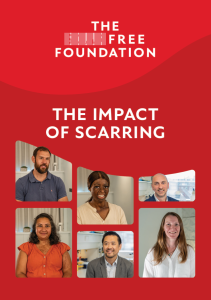
QVH is supporting a new report from The Scar Free Foundation which highlights the lasting impact scars can have on people’s health, wellbeing and everyday lives.
Published this week, The Impact of Scarring report calls for greater awareness of scarring as a significant long-term health issue and increased investment in research to improve treatment and prevention.
The report estimates that more than a third of UK adults, around 20 million people, are living with a scar. It argues that scarring is too often dismissed as a cosmetic issue despite the significant physical, psychological and social impact it can have on people’s lives.
The report found that just over one in four people with a scar say it affects their emotional wellbeing, while more than one in five say it affects their physical wellbeing. As well as physical effects such as pain, itching and restricted movement, scars can affect confidence, relationships, education and employment. The report also highlights health inequalities associated with burn injuries, including evidence that children living in the most deprived communities face a significantly greater risk of serious burns than those living in the least deprived communities.
As a specialist Burns Centre within the London and South East Burns Network, QVH provides specialist treatment, rehabilitation and ongoing support for patients affected by serious burns and scarring. For many burns patients, recovery continues long after a wound has healed, with scar management often forming an important part of their ongoing care.
Mr Omar Dawood, Consultant Plastic and Reconstructive Surgeon at Queen Victoria Hospital, said:
“A burn injury may take seconds to happen, but for some patients its effects can be lifelong.
“Burns are a significant cause of scarring, and people often think of scars as a cosmetic issue when the reality can be very different. Scars can affect movement, cause discomfort and itching, and have a profound impact on confidence and mental wellbeing.
“As a burns surgeon, I see patients at every stage of that journey. While a burn wound may heal within weeks, adapting to life with a scar can take much longer and often requires ongoing treatment, rehabilitation and support.
“That’s why this report is so important. It helps shine a light on the reality of living with scarring and the need for continued research and investment in this area.”
QVH provides specialist inpatient and outpatient burns services, supported by multidisciplinary teams including surgeons, nurses, therapists, psychologists and rehabilitation specialists.
Tamara Everington, Managing Director and Chief Medical Officer at Queen Victoria Hospital, said:
“We welcome the publication of this report and the important conversation it encourages about the impact of scarring.
“At Queen Victoria Hospital, we take a comprehensive and holistic approach to scar management. Alongside clinical treatment, we support patients with the wider physical and psychological effects that can follow a burn injury or other trauma.
“We have introduced innovative approaches to help reduce and treat scarring, but we know there is still much more to learn. Research has an important role to play in improving outcomes for future patients, and we welcome the report’s ambition in this area.
“We also recognise the role health inequalities play in burns and scar care and are committed to working with partners to help ensure everyone can access the care and support they need.”
The report calls for serious scarring to be recognised as a long-term health issue, improved access to joined-up care and psychological support, and greater investment in research aimed at preventing and reducing scarring in the future.
News Archives
Visiting advice
Read our latest guidance here
Minor injuries unit
Read more about our minor injuries unit, open 8am - 8pm every day.

What Drives You? Find it at QVH.
Friends and family recommendations
100% of inpatients would recommend us to friends and family.
Referral guide (updated February 2024)
Find out more about our services and how to refer patients to us.